
On technological solutions in uranium production in Uzbekistan
Introduction
As of 2026, Uzbekistan’s uranium industry declares ambitious plans: under the state strategy, annual uranium output is to be raised to 7,200 tonnes by 2030.
Uzbekistan’s total uranium reserves are officially estimated at 139,000 tonnes. Yet the practising geologists and engineers whose research was carried out in the Central Kyzylkum know the hidden reverse side of these figures. Actual depletion of the key producing deposits has passed 40%, while the state geological survey’s data on C1-category reserves have historically diverged from the mining directorates’ rigorous production exploration by as much as 20%.
Problems of the modern uranium industry
1. Colmatation and depletion of the ore beds
As beds are mined out, the residual uranium is largely locked in low-permeability, clayey or highly carbonate zones. The extensive method — injecting above-normative volumes of sulphuric acid — leads to an environmental catastrophe for the groundwater. The acid reacts with the host calcite, forming gypsum. The bed goes irreversibly “blind” (becomes colmatated), well injectivity drops to zero, and the uranium concentration in the productive solutions falls to a critical minimum. In-situ borehole leaching (ISL) with reckless injection of sulphuric acid, in which barrier (cut-off) wells are not properly used, permanently destroys the strategic reserve of the Central Kyzylkum — the underground aquifers, whose remediation would require hundreds of millions of dollars.
2. Technological solutions
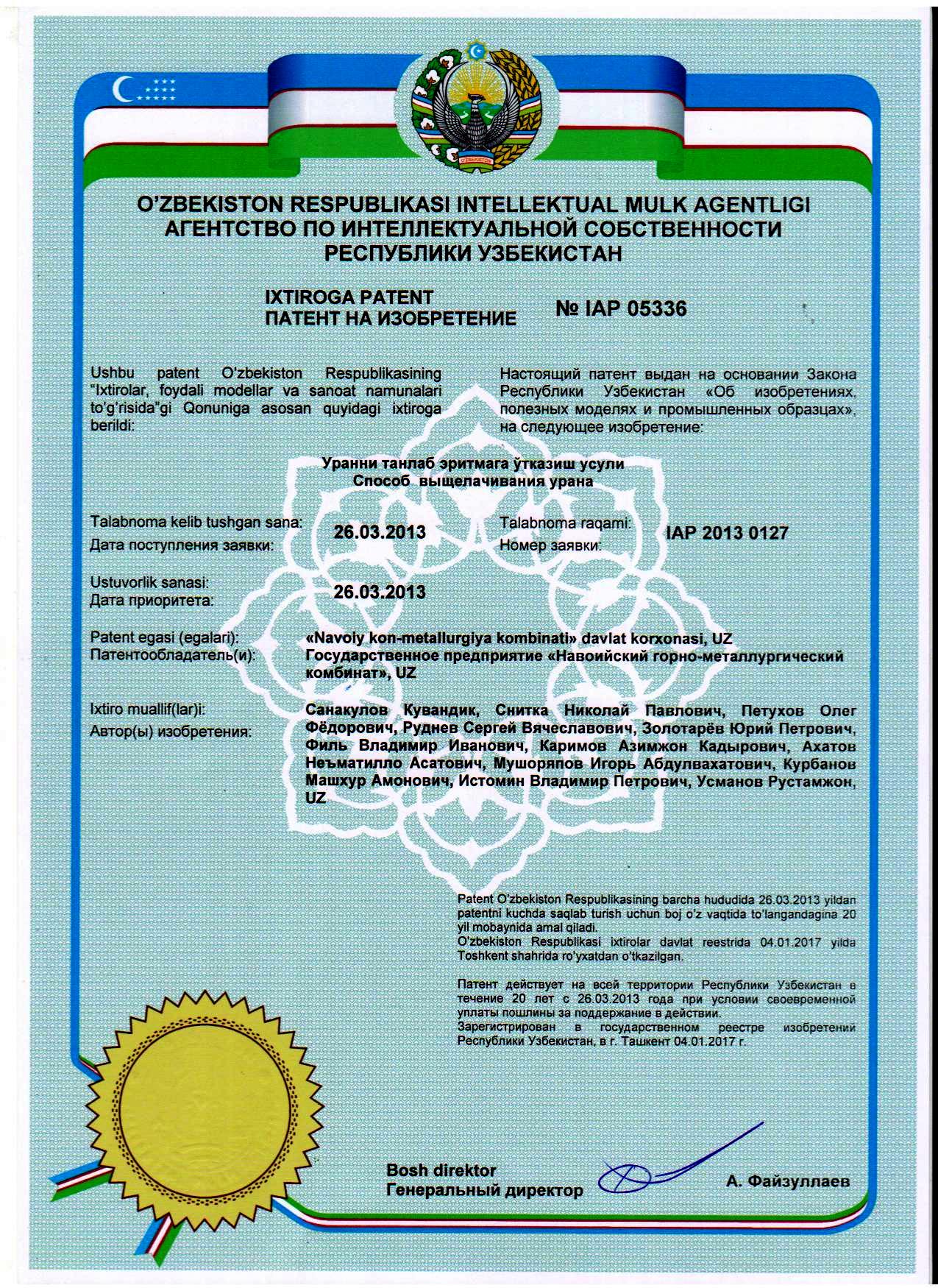
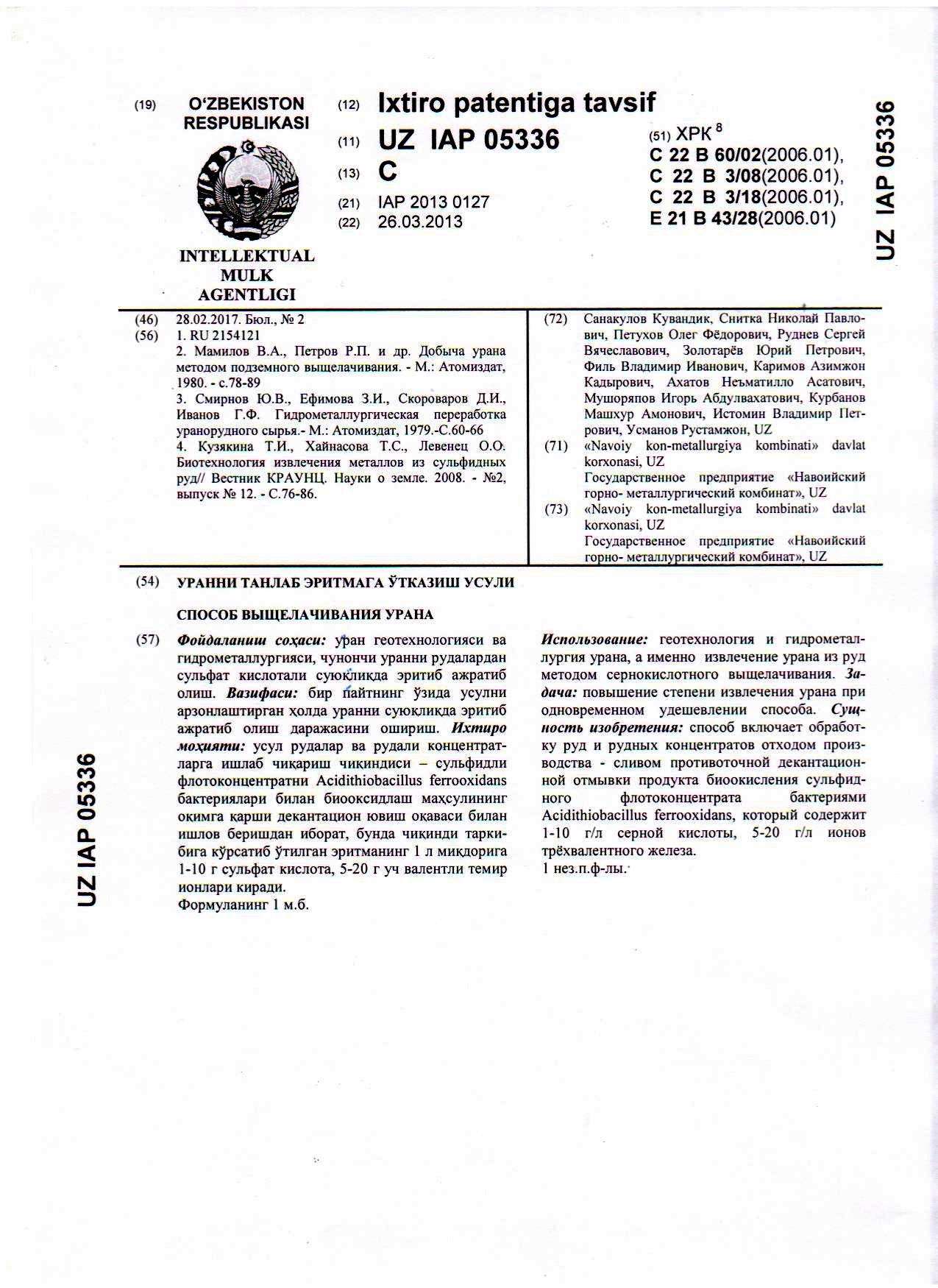
Solution No. 1. A method of in-situ uranium leaching (patent No. IAP 05336)
The fundamental basis of uranium chemistry is the conversion of the inert, insoluble tetravalent form (U⁴⁺) into the mobile hexavalent one (U⁶⁺).
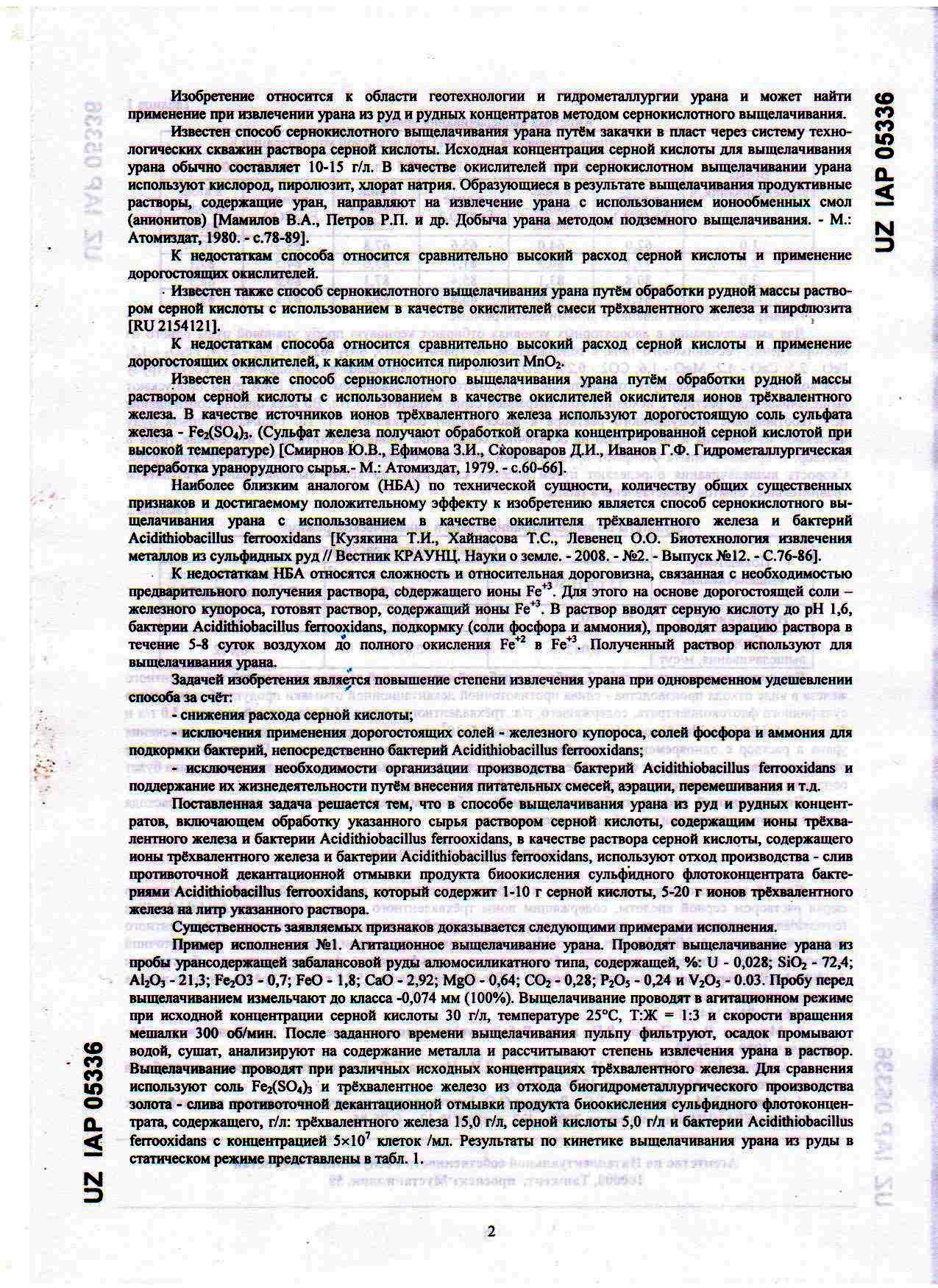
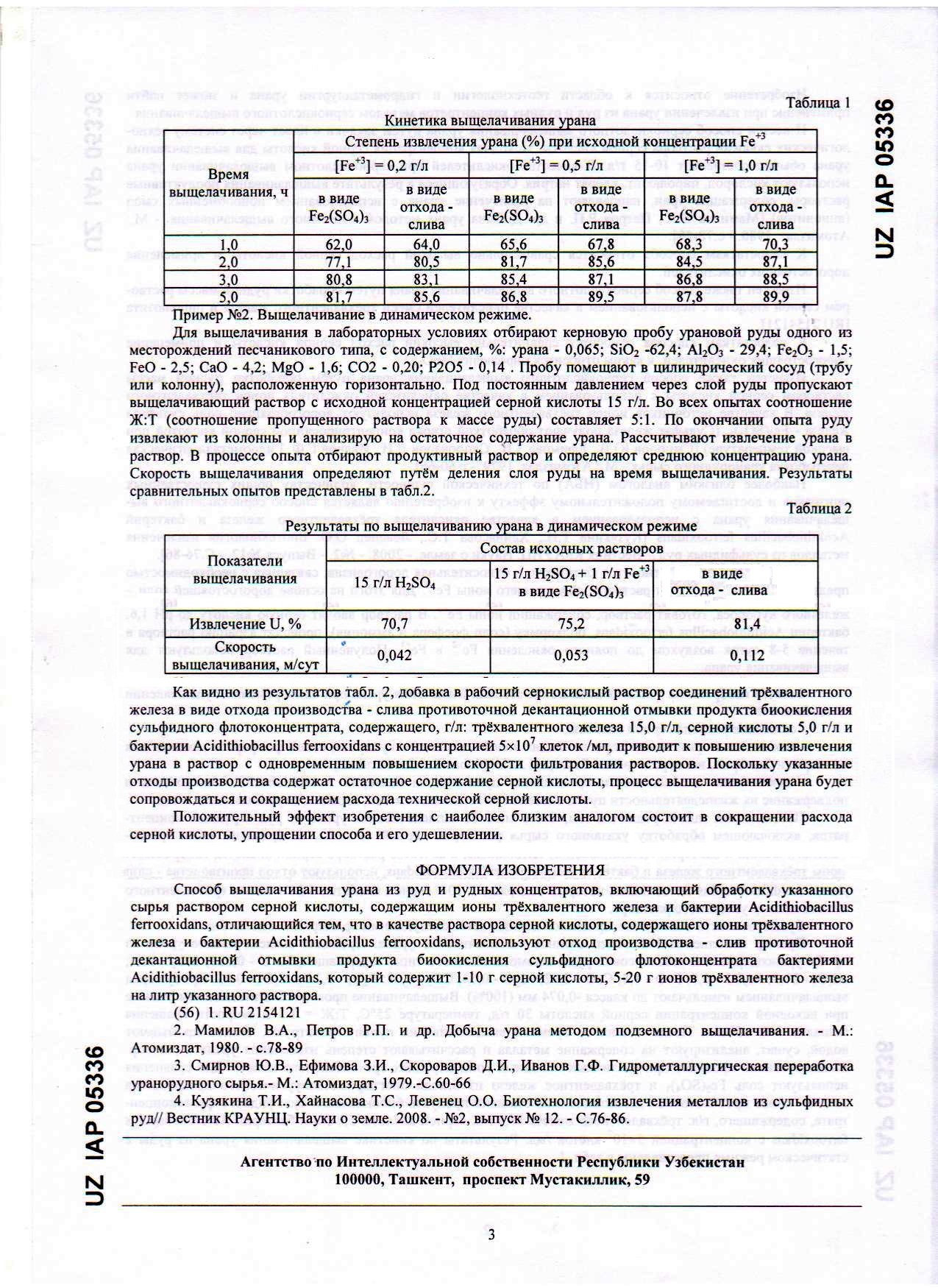
Instead of purchasing pure acid, a brilliant synergy of the uranium and gold operations was introduced and tested in the deep beds of the Northern Mining Directorate (SevRU) deposits. The technology used the liquid sulphide waste of the gold-ore bio-oxidation complex at Hydrometallurgical Plant No. 3 (Kokpatas).
- A free bioreagent containing a culture of the bacterium Acidithiobacillus ferrooxidans and ferrous iron (Fe²⁺) was fed into the bed.
- In parallel, technical oxygen and a balanced nutrient medium were injected through dedicated units to keep the bacteria viable in the anaerobic conditions of the subsurface.
- The bacteria continuously regenerated the iron into its ferric form (Fe³⁺), which acted as the most powerful, ideal oxidant, converting U⁴⁺ → U⁶⁺ without acidifying the bed.
- Result: stable permeability of the subsurface and an enormous yield — more than 80 tonnes of uranium oxide concentrate (U₃O₈) from a single production site.
Solution No. 2. Acid-free extraction with process water (the experience of Ketmenchi)
As long ago as 30 years back, in the mid-1990s, amid economic chaos, a geochemical fact was proved at the Ketmenchi deposit: the uranium there is originally present in its natural hexavalent form (U⁶⁺) thanks to centuries of natural infiltration by oxygenated waters.
The authors of the method introduced extraction with ordinary process water containing dissolved gases, without a single drop of sulphuric acid. The water gently washed out the ready uranyl ion, delivering practically zero reagent cost and absolute environmental cleanliness.