Scientific dynasty and recognition
My grandfather — Ilmnur Mindiyarov (1888–1974)
My grandfather, Ilmnur Mindiyarov (1888–1974, the father of my mother, Anfisa Gilemnurova), was a contemporary of difficult eras. He lived through the path from the old order of the Russian Empire to Soviet Samarkand, keeping his faith and the light of knowledge.
He was a true enlightener and creator. Through years of repression and hardship he carried the most precious thing of all — the light of knowledge (Ilm) and the purity of the soul (Nur).
During the repressions of 1938, from his native village of Ishkarovo in Bashkiria to the land of Samarkand, he brought not resentment but creation. He brought with him knowledge and culture.
He was a tall and highly erudite man, spoke Arabic fluently and interpreted the Quran. He taught literacy, was a mufassir, had a deep command of the Arabic language and taught the correct pronunciation of Arabic text. He gave warmth and opened windows to the world for everyone who wished to learn.
He did not merely give knowledge — he tempered character, preparing us for great heights and victories.
His name is now our motto. His life is our example. We make history with our own minds, just as he bequeathed to us.
My mother
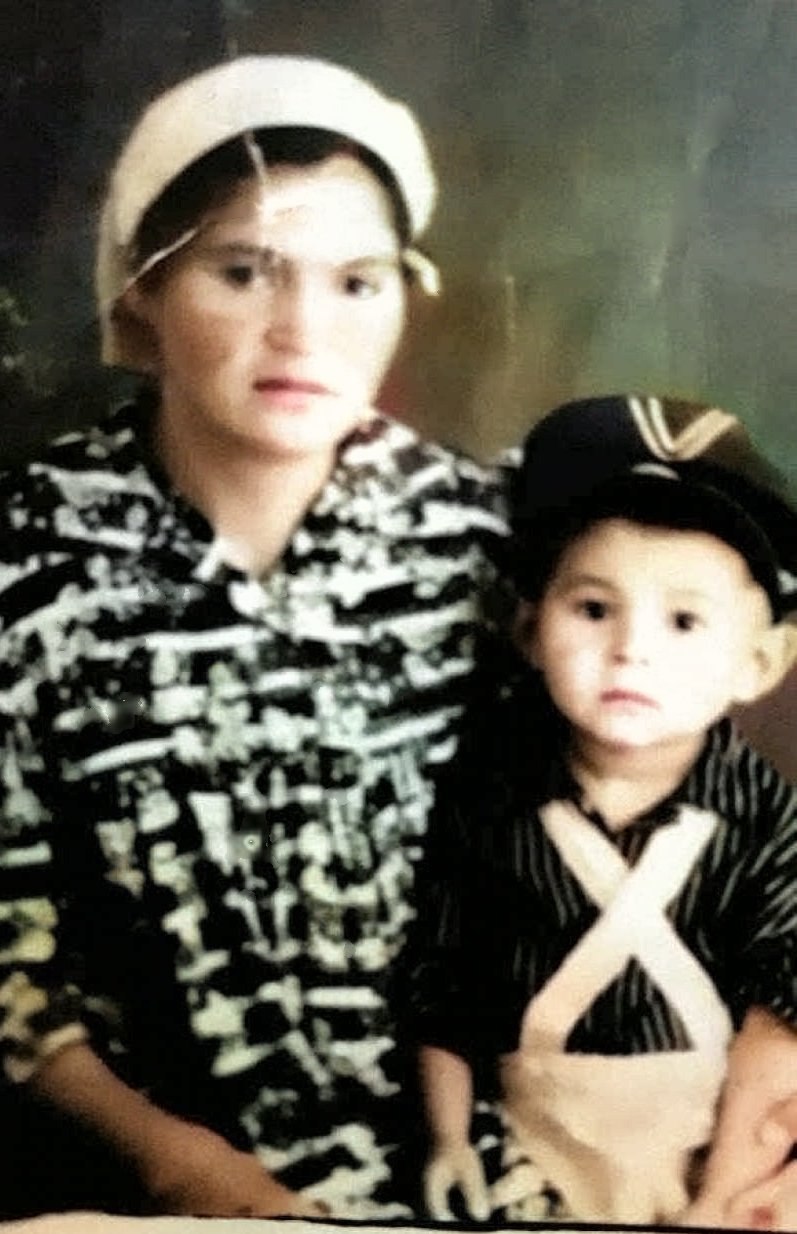
What I have achieved... I am grateful to my Uncle Fanis and to my Angel, my beloved, unique Mother Anfisa... All the rest of my life, my new inventions and achievements I dedicate to the memory of my loved ones, who were selflessly devoted to me…
My mother, Gilemnurova Anfisa, was born in the village of Ishkarovo (Bashkiria) into a well-known Bashkir family on 17 December 1933. She completed 8 grades of the Bashkir school. Her father (my grandfather) was named Ilmnur (Gylymnur in Bashkir), her mother — Mavtukha. My grandfather was of the Ishkarov family, my grandmother — of the Sultanov family.
A bit of history: the founder of the village of Ishkar was a nobleman of Bashkiria, Ishkar Arslanov. Ishkar's son — Kulmet Ishkarin (c. 1720–1800). Kulmet's children — Mukhamedrakhim, Mukhamedsharif, MukhamedSadyk and Amir. Mindiyar (1850–). Mindiyar's children — the Mindiyarovs: Safuan, Lutfulla, Sharifulla, Khairulla, Mukhamednur, Gylymnur (Ilmnur, my grandfather)…
There was also the famous Sultanov family, whom the people often called «governors» because of their enormous power.
My grandmother Mavtukha (translated as «open» — a name popular in the Bashkir community in the 18th–19th centuries) was from this famous family.
In 1938 my grandfather Mindiyarov Ilmnur was repressed from his native village of Ishkarovo to the Samarkand lands. My mother, together with her brothers, remained in the village. Only in 1947, after finishing 8 grades of the Bashkir school, did my mother come with her younger brothers to the village of «Mitan» (Samarkand region) to their father, and there she finished the Uzbek secondary school.
When I visited the village of Ishkarovo, elderly people who had seen my mother back in 1946–1947 told me: «She was so beautiful and clever that we imitated her beauty».
My memory
Without you this life is only a dream to me,
It is you, my tender miracle.
The endless wisdom of your eyes
And your voice that I hear everywhere.
I look at the stars in the silence,
Believing: there, in the serene expanse,
Together with the angels, as their equal,
You carry away earthly grief.
My thoughts and dreams are of you,
And in the quiet my eyes softly weep.
Our kind fairy tale will bring
Us back to those warm shores.
I will press your palm to my heart,
Feeling the dear, familiar warmth,
And through tears I will embrace you:
“We have come back, the time has come!”
You will be the most beautiful dream,
The sweetest that memory keeps.
Even in the other, unearthly world,
Your image heals me in an instant.
I pray to God — to Allah —
For just this one meeting for us,
To say once again: “I love you, Mama,”
So that the light in my heart never fades.
…My mother, Anfisa Gilemnurova,
was my temple of love,
tenderness, inspiration.
How I miss you and
how I long for you…
My dear, one and only,
wise, beloved…
Your grandchildren have grown up...
The story of our family: from a brave colonel to wise teachers
My dear grandchildren! I want you to know the story of our large family. On my mother's side (Anfisa Gilemnurova), our family begins in Bashkiria, in the beautiful village of Ishkarovo. Did you know that this village is named after our direct ancestor? His name was Ishkar Arslanov. More than 250 years ago he was a real Bashkir colonel, a leader and comrade-in-arms of Yemelyan Pugachev. He fought for the freedom of his people.
When the uprising died down, Ishkar showed wisdom: he came to the generals himself, managed to protect his family and kept these lands. In 1795 there were only 10 houses in the whole village, and only our relatives lived there! The name «Mindiyarov», borne by my mother's family, comes from the name of the colonel's great-great-great-grandson — Mindiyar. Our lineage is strong and runs through the centuries: from Ishkar to Kulmet, then to his great-great-grandson Mindiyar and, finally, to Mindiyar's son — my grandfather Gylymnur.
My grandfather Gilemnur and grandmother Mavtukha (her name beautifully translates as «open soul») were remarkable people. They were enlighteners — bringing people literacy, culture and kindness. In the difficult year of 1938 the persecutions began, and my grandfather had to leave his native Bashkiria for distant Samarkand. But most importantly: in his heart he brought to the new land not malice or resentment, but creation, love of labor and immense knowledge.
Your great-grandmother Anfisa studied in that very Bashkir school in Ishkarovo and graduated from it in 1947. Until the end of 2025, her cousin — grandmother Ilgiza (1936–2025) — lived in the neighboring village of Gremuchy Klyuch. Remember your roots, be proud of your ancestors, and be creators just as they were.
My family tree
Where faith, will and science meet: the chronicle of our family
The united genealogical chart (shezhere)
Brothers and sisters: Uktam, Erkin, Tulkin, Gulchehra, Gulsara, Gulbakhor
I. The paternal wing: the history and fates of the Usman Khoja brothers
On the paternal side the family traces its descent to the noble Banu Hashim clan of the Quraysh tribe — to Hazrat Ali ibn Abi Talib himself, the fourth Rightly Guided Caliph and son-in-law of the Prophet Muhammad. In Central Asia the descendants of this branch are traditionally honoured as members of the Khoja estate (khojalar).
- Imam Ishaq Khoja (Ishaq Bab): A direct descendant of Hazrat Ali and an outstanding missionary. His line of succession laid the stronghold of literacy and enlightenment in the Karakul oasis of the Emirate of Bukhara.
- Ikrom Khoja: A venerable keeper of the family’s traditions in Karakul at the turn of the 19th and 20th centuries.
- Grandfather — Usman Khoja, son of Ikrom Khoja (1880s – 1924): A man of legendary will. At the age of 16 he walked from Karakul to Karmana completely barefoot, promising to achieve everything by his own mind. He became the largest landowner (400 tanobs of land) and a patron — he gave work to dozens of people and had them educated free of charge. In 1924 he was brutally killed by basmachi while defending his home (its inner and outer courtyards, ichki and tashqi hovli) and refusing to hand over his horses and gold.
The fates of Usman Khoja’s children (the brothers of Iso Khoja):
The tragedy of 1924 left the large family without its head, yet Usman Khoja’s sons (Malik, Kambar, Rajab) showed unity and courage and preserved the family through the hardest years of Soviet repressions and collectivization:
- Malik Khoja (1900–1970): The eldest son. His children: Mayram, Mastura, Mabub, Bakhshillo. Mayram’s children: Ramazon and Akhtam; Mastura’s children: Mukhammad, Bakhodir, Lola and Dilmurod; Mabub’s children: Odil, Olim, Ilkhom and Dildora; Bakhshillo’s children: Khasan, Khusan and Takhir.
- Kambar Khoja: Named after the loyal companion of Hazrat Ali. His children: Sadulla and Robiya. Robiya’s children: Rokiya (her children are Gulamdon, Azamat, Dzhamilya, Yashin and Lochin), Roziya and Kamol. Kamol’s children: Otabek, Sanobar, Feruza and Sherali; Otabek’s children: Guzal, Amirbek and Asilbek; Sherali’s children: Munisa, Rakhmatullo, Kamolzhon and Robiya.
- Mukhtor Khoja: A worthy member of the family. His son: Ozod.
- Rajab Khoja: He left behind a large, far-reaching branch. His son is Sharof Khoja (the father of Shakhzoda and Lutfullo; Lutfullo’s children are Umid and Laziz). His other sons: Bobojon and Shavkat.
- Zikrillo Khoja: His name, which carries the deep Sufi tradition of the remembrance of God, became an important part of the brothers’ shared spiritual core. His daughter: Muborak; her children are Ibrahim (whose son is Bakhodir Zhuraev) and Makhmud.
- Lukmon Khoja (an adopted son who became one of their own): The son of a destitute widow whom Usman Khoja took into his care, saving her from poverty. Grandfather erased the difference between born and adopted children: he gave Lukmon the status of a khoja and raised him on an equal footing with everyone. His worthy son: Khidoyat (“the Right Path”).
- Father — Iso Khoja (Iso Usmanov) (1922 – 2013): The youngest son of Usman Khoja (by his fourth wife). He went through the hell of the Great Patriotic War on the front line of the 1st Ukrainian Front. Gravely wounded, he was saved and nursed back to health in a potato pit by a Ukrainian woman, Grandma Nadezhda, who risked the lives of her own family. He passed away at the age of 91, leaving his sons the precept of the “golden mean”: rejecting the party fanaticism of the CPSU and religious radicalism in favour of freedom of the mind.
II. The maternal wing: the “Light of Knowledge” of Ilmnur Mindiyarov
The maternal line brought into the family refined intellectual erudition and academic steadfastness.
- Founder of the line — Ishkar Arslanov: A nobleman of Bashkiria and the founder of the village of Ishkarovo. According to the 4th revision of 1782 and the 5th revision of 1795 (tax censuses of the Russian Empire), during Pugachev’s Rebellion of 1773–1775 he was already about 73–75 years old, and in 1783, at over 80, he was still a serving volost starshina (district elder). A volost starshina was responsible for collecting taxes, keeping order, enforcing the law and judicial functions in the territory under his authority. When I was very small, my grandfather Ilmnur and my mother told me: Ishkar is our forefather, and his name means “goddess of love”. His son was Kulmet Ishkarin (c. 1720 – 1800), from whom several branches of families well known in the district descend: the Mukhametrakhimovs, Sharipovs, Mindiyarovs and others. Kulmet’s children were Mukhamedrakhim, Mukhamedsharif, MukhamedSadyk and Amir.
- The direct line from Kulmet to Mindiyar: Amir Kulmetov was Kulmet’s son. His son was Mukhametamin Amirov (born c. 1787), an ukaz-appointed azanchi (muezzin). His son was Valiakhmet Mukhametaminev (born c. 1817), an ukaz-appointed imam of the cathedral mosque. His son was Mindiyar Valiakhmetov.
- Mindiyar Valiakhmetov (b. 1850): The great-great-great-grandson of Ishkar Arslanov, an ukaz-appointed azanchi. The Mindiyarov surname comes from him. His children: Safuan, Lutfulla, Sharifulla, Khairulla, Mukhamednur, Gylymnur (Ilmnur). Mukhamednur’s daughter was Ilgiza (1936–2025), my mother’s cousin.
- Maternal grandfather — Ilmnur (Gylymnur in Bashkir) Mindiyarov (1888 – 1974): A Bashkir intellectual whose name literally translates as “Light of Knowledge”. In the tragic year of 1938, fleeing Stalin’s repressions, he left his native village of Ishkarovo in Bashkiria and resettled on Samarkand land. He had a unique intellect, an impeccable command of Arabic and was a recognised mufassir — an interpreter of the sacred meanings of the Quran — teaching people to read and write to the end of his days.
- Maternal grandmother — Mavtukha: She came from the famous Sultanov family, whom the people often called “governors” because of their enormous power. The name Mavtukha (translated as “open”) was popular in the Bashkir community in the 18th–19th centuries.
- Mother — Anfisa Gilemnurova (Usmanova) (17.12.1933 – 21.12.1998): She was born in the village of Ishkarovo (Bashkiria) into a well-known Bashkir family and completed 8 grades of the Bashkir school. A woman of exceptional inner culture who lovingly passed on to her children a love of books and respect for work and fundamental knowledge.
III. The present and the future: the scientific dynasty of Rustamzhon Usmanov
All the qualities of the great ancestors — the creative spirit of Usman Khoja, the wise “middle path” of Iso Khoja and the “Light of Knowledge” of grandfather Ilmnur — were fully embodied in the eldest son, Rustamzhon Usmanov. A graduate of Moscow State University, a distinguished scientist in applied mathematics and mechanics and laureate of the State Prize of the Republic of Uzbekistan of the first degree, he has devoted his life to leading people out of ignorance towards the light of science. Symbolically, he dedicated the name of his scientific brand, IlmNur, directly to the memory of his beloved grandfather Ilmnur Mindiyarov, uniting the heritage of both branches under this name.
Today this great tree continues to grow and grow stronger through the children and grandchildren of Rustamzhon Usmanov:
- Brothers and sisters: Uktam, Erkin, Tulkin, Gulchehra, Gulsara, Gulbakhor.
- Rustamzhon’s children: Gayrat, Nilufar, Mukhayyo.
-
Grandchildren (the fifth generation from Usman Khoja and Ilmnur Mindiyarov)
- Gayrat’s line: Madina, ALISHER (who continues the direct male line).
- Nilufar’s line: Nargis, Muattar.
- Mukhayyo’s line: AMIRSHAH (who continues the male line), Yasmina.
The history of our dynasty proves it: wealth can be taken away and houses can be destroyed, but the genetic code of enlightenment, honour and knowledge laid down by great ancestors cannot be destroyed. It lives on in the future.
Through pain, silence and humiliation: the story of the fortitude of my mother Anfisa and my grandfather Ilmnur Mindiyarov
The history of our family is an unhealed wound left by the hard years of repression. It is a story of how the merciless Stalin era broke human destinies, and of the exorbitant, terrible price that my mother, her children and all our relatives had to pay.
It all began when my grandfather, Ilmnur Mindiyarov, was repressed and exiled to the settlement of Mitan in the Samarkand region.
In those years the brand of «enemy of the people» instantly turned a respected man into an outcast, depriving his family of rights and protection. From the moment he was repressed, a real hell began for his loved ones.
My mother carried on her shoulders the whole burden of that inhuman time. But the most painful blow for her was the human cruelty they had to face in the new place. Poisoned by propaganda and embittered by poverty, some local children and adults vented their anger on the defenseless resettlers.
I was very small then, and I remember how the neighbors' children teased us and called us «Tatars» in the worst, most humiliating way. My mother, Anfisa Gilemnurova, stood nearby. She heard it all.
Every cruel word thrown at her little children wounded her right in the heart. But she could not shout back, could not defend us openly in a strange, hostile settlement. She kept silent. All that burning resentment, injustice and fear for our future she meekly kept inside, saying not a word to anyone, so as not to multiply the misfortune.
That long, soul-rending silence did not pass without a trace. Suppressed grief and defenselessness undermined her health. In the end my mother's body could not withstand this enormous stress: she fell ill with a severe, incurable disease — Werlhof's disease. Her blood, her body literally wept with unshed tears and the injustice endured in Mitan.
Her family, her children were mocked simply because they were special settlers, and this trauma has stayed with us forever. But even as she was fading from her illness, my mother did not break. She preserved her humanity, dignity and boundless love. She sacrificed her health and her life, taking the whole blow upon herself, to protect us. This text is a tribute to the memory of my grandfather Ilmnur Mindiyarov, my dear mother and all our relatives. Their suffering must not be forgotten. We remember their pain, we bow before my mother's holy silent feat, and this memory will stay with us forever.
The story of one rescue
In memory of my father — Usmanov Iso, a front-line soldier of the Great Patriotic War, and his rescuer, Grandmother Nadya
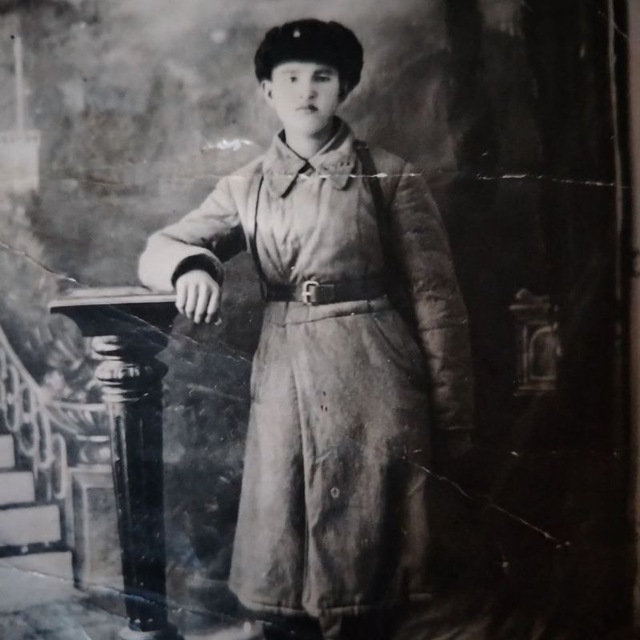
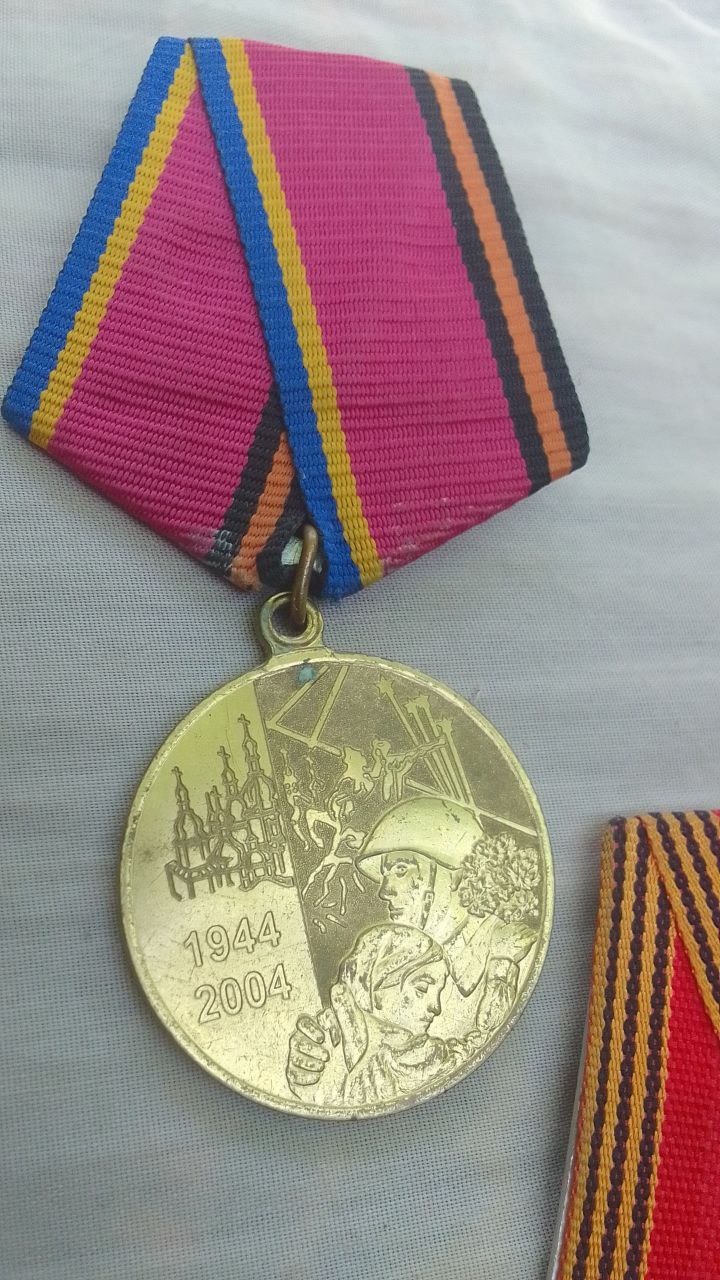
This moving story tells of Usmanov Iso, a front-line soldier of the Great Patriotic War, and a simple Ukrainian woman called Grandmother Nadya, who saved him from death in 1944–1945. Risking her life right under the noses of the punitive squads, she hid the wounded soldier in a potato pit and nursed him back to health. Fifty-nine years later the veteran received a state award of Ukraine and greeted the ambassador in pure Ukrainian, learned in the days of his rescue.
Every family that lived through the Great Patriotic War has its own memory. But in our family this memory is special — it is woven from the bitter tears of loss, incredible courage, and the great motherly mercy that proved stronger than war and ethnic hatred.
In the terrible years of the war our family suffered an irreplaceable loss. Three of my father's own brothers were brutally murdered by Bandera's men. It happened in the bloodiest and cruelest period of the confrontation — in 1944–1945. For our family this tragedy remained an unhealing wound for life. But at the very same time, on that same war-scorched Ukrainian soil, a true miracle took place. My father survived. And he survived thanks to the one whom we still remember with awe and tears of gratitude — a simple Ukrainian woman named Grandmother Nadya (Nadezhda).
My father, Usmanov Iso (son of Usman, grandson of Ikrom), an Uzbek by nationality, found himself in the very heart of that merciless partisan war in Western Ukraine. He fought valiantly on the front line in the ranks of the legendary 1st Ukrainian Front under the command of Marshal Ivan Stepanovich Konev. During the heaviest battles of 1944–1945, Iso was severely wounded and doomed to die.
But the fearless Grandmother Nadya hid him on the very outskirts of the village. She concealed the wounded Uzbek soldier in a closed pit where potatoes and provisions were usually stored. The risk was deadly: had the Bandera men or the punishers found out that she was hiding a Red Army fighter, she and her whole family would have faced an inevitable, cruel execution.
Every day, risking her own life, she climbed down into that cold earthen pit, tended young Iso's wounds and nursed him, giving him warm goat's milk to drink — the only medicine available in those terrible days. Father recalled how she often wept over him and said in her native tongue: «I too have three sons… They are also somewhere out there, wounded like you, perhaps…»
In her motherly heart there was no division into «ours» and «strangers». Saving a stranger's Uzbek son, Nadezhda prayed to God that someone would likewise save and spare her own children. Sadly, the war dealt mercilessly with her grief-stricken family: two of her sons died at the front, and the third returned but had ruined his health and died almost immediately after the war. My father, Usmanov Iso, became for her that very son whom she managed to snatch from the clutches of death.
While in that pit and speaking for long days with his rescuer, my father did not merely listen to her — he absorbed her speech with all his heart. An Uzbek by nationality who knew Russian perfectly, he mastered Ukrainian to perfection. That language became for him not just a means of communication, but the language of his second birth.
Decades passed. History seemed to have receded into the past, but the memory of the feat of a simple Ukrainian woman and the courage of a Soviet soldier lived on in our family in Uzbekistan. Justice triumphed after 59 long years.
In 2004, the Ambassador Extraordinary and Plenipotentiary of Ukraine to the Republic of Uzbekistan officially arrived in our city of Navoi. On behalf of President Leonid Kuchma, our father, veteran Usmanov Iso, was solemnly presented with a state award — the jubilee medal «60 years of the liberation of Ukraine from the fascist invaders».
This high award on the chest of Iso Usmanov became a sacred monument to them both. In the metal of this medal there merged forever the valor of Marshal Konev's soldier, the great mercy of Grandmother Nadya, and the eternal memory of her fallen hero sons. This medal confirmed: their shared truth and their humanity defeated oblivion.
On the day of the presentation, something happened that struck the entire diplomatic mission to the depths of their souls. My father, the elderly Uzbek Usmanov Iso, after almost 60 years spoke to the ambassador in the purest, flawless Ukrainian. He had not forgotten a single word, a single intonation. That language stayed with him as a sacred tribute of memory, as eternal gratitude to Grandmother Nadya, who gave him life.
In our family archive we carefully keep a photograph from that memorable day in Navoi. This picture and the medal itself are our greatest treasure. They prove that even in the darkest times, humanity, kindness and loyalty defeat any cruelty. The medal of a soldier who fought under Marshal Konev, and the great feat of Grandmother Nadya, will forever remain in the memory of our family.
My teachers
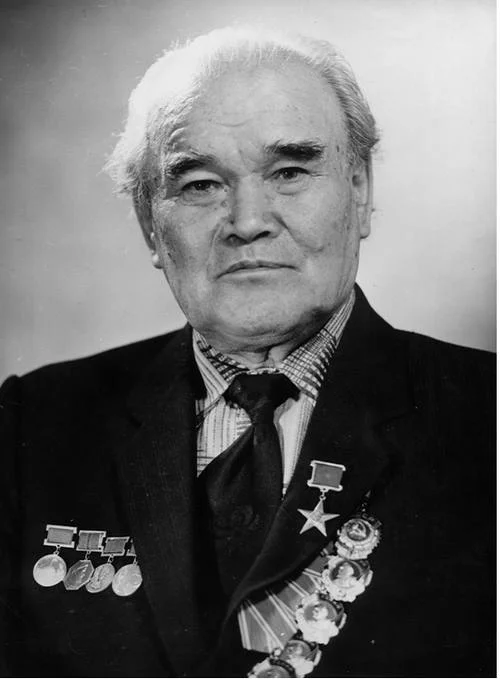
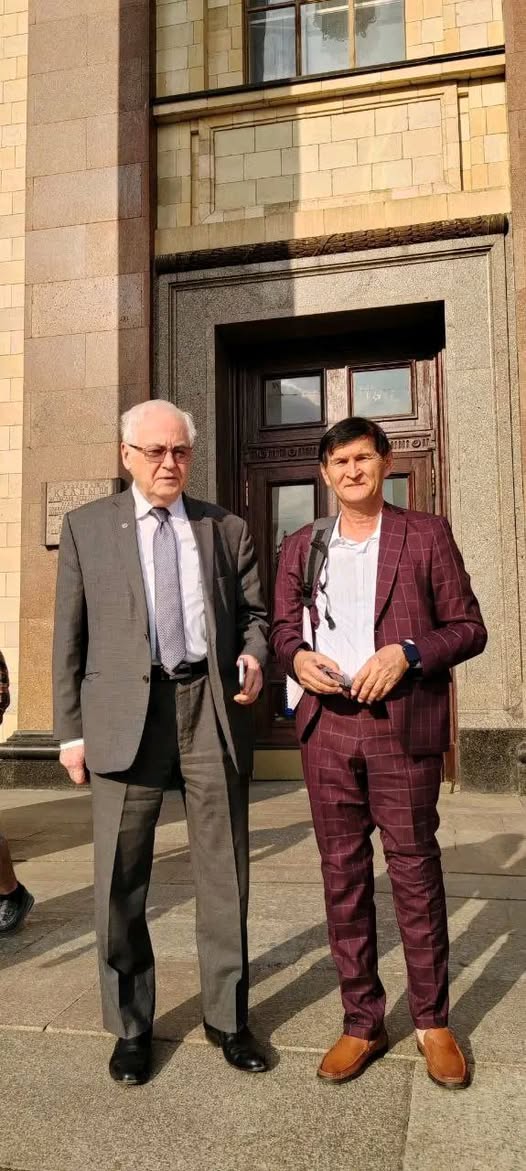
About my teachers.
My scientific supervisors and consultants in the field of fluid, gas and plasma mechanics are the world-renowned scientists Kh.A. Rakhmatulin and R.I. Nigmatulin.
Under their guidance I completed my candidate's (1987) and doctoral (2015) dissertations. The work was carried out at the Department of Wave and Gas Dynamics of Lomonosov Moscow State University. The research and applied scientific part was conducted in close cooperation with the Navoi Mining and Metallurgical Combine (NMMC) in Uzbekistan.
Under the guidance of my mentors, a unique foundation was created in the field of multiphase-media mechanics. Formulas and numerical methods were developed that describe how liquids, gases and heat behave inside porous geological ore bodies.
The fundamental models made possible the accurate prediction of the dynamics of solution spreading. This formed the basis of a highly efficient and environmentally safe integrated technology for the extraction and processing of uranium, rare, rare-earth and precious metals at NMMC facilities.
Mathematical calculations helped to design new technological processes for extracting gold from complex, hard-to-process raw materials and technogenic waste.
P.S. I express special gratitude to my parents — my beloved and unique mother Anfisa Gilemnurova and my father Iso Usmanov — for their endless support and faith in me.
Heartfelt thanks to my uncle Fanis Mindiyarov and my dear grandfather Ilmnur Mindiyarov for their wise advice, care and a reliable shoulder by my side.
I would also like to express my particular gratitude to my respected teachers at Samarkand State University — A.Sh. Sharapov and Kh.T. Turaev — for the knowledge they passed on, their patience and high professionalism, which became an important guide on my path.